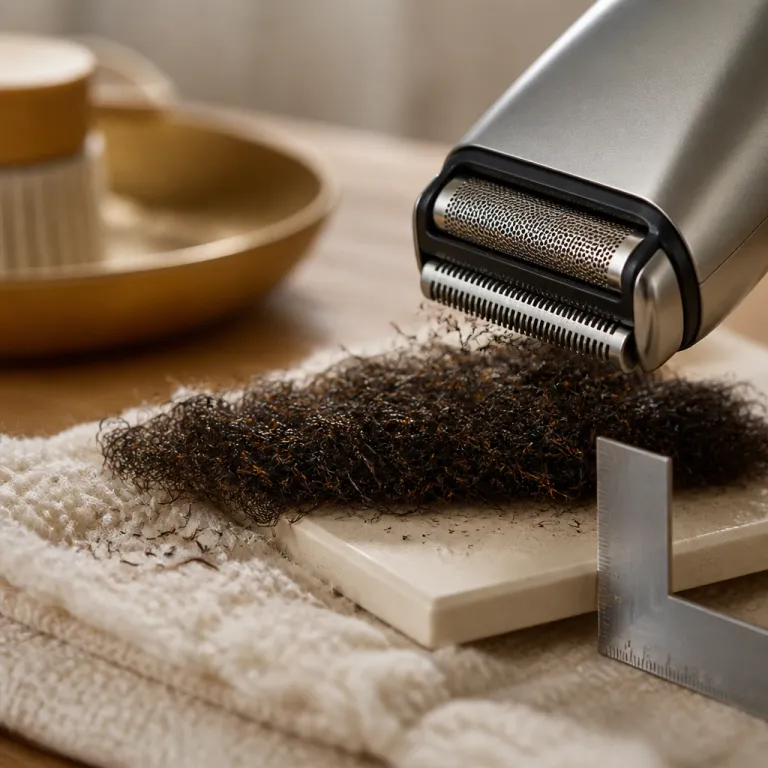
TL;DR: Curly facial hair is more likely to loop back into the skin and cause razor bumps, especially when a powerful electric shaver cuts too close. Look for shavers with forgiving foil geometry, sharp blades and adjustable power, pair them with careful prep and post shave care, and accept a tiny bit of stubble on the neck if you are prone to pseudofolliculitis barbae.
Why curly facial hair fights most electric shavers
Curly facial hair behaves differently against a skin razor than straight stubble. When each hair bends back toward the skin, it enters the foil or rotary guard at an angle, so the internal blade often tugs before it can cut hair cleanly. That angled contact is why an electric shaver on a curly beard can feel like it will rip hairs out rather than give a close shave.
On curly beards, the hair shaft often reenters the skin after shaving and creates ingrown hairs that turn into painful bumps. Dermatologists call the chronic version of these razor bumps pseudofolliculitis barbae, and it is especially common in men with tightly coiled facial hair and sensitive skin. When a shaver or razor cuts too close, the sharpened hair tip sits just below the surface, so as it grows it curls sideways and causes ingrown bumps that look like acne but hurt more.
Most mainstream electric razors are engineered around straight, fine hair that stands upright and feeds easily into foils. Curly hairs hit the foil perforations off axis, so the moving blades can catch and yank before they slice, which increases irritation and razor burn on the face. That mismatch between beard type and blade geometry explains why a premium electric razor can still leave you with razor bumps and red, angry skin after every shave.
Blade geometry, foil apertures and motor speed for curly beards
The geometry of the blade and foil is the quiet culprit behind many electric shaver curly beard razor bumps complaints. Small, round foil apertures trap curly hairs at their bend, so the internal blades chew instead of cleanly cut hair at the surface. Wider, elongated and slightly angled perforations, like those on the Braun Series 9 Pro, let curly hairs slide in straighter and reduce the force needed for each shave stroke.
Blade sharpness matters just as much as foil design, because a dull blade forces you to press harder into the skin and that pressure drives hairs below the surface. High end series models from Braun Series and Panasonic Arc 5 use hardened steel blades that stay sharp longer, which helps prevent razor burn and reduces irritation on sensitive skin over time. When blades stay sharp, they cut hair in one pass, so you make fewer strokes over the same patch of face and lower the risk of ingrown hair and razor bumps.
Motor speed is the third leg of this engineering triangle, and it is often misunderstood by everyday shavers. Faster motors in premium electric shavers, such as the linear drive in Panasonic foil razors, reduce the time a curly hair spends half cut in the foil, which means less pulling and fewer ingrown bumps along the jawline. The trade off is that a very close shave from a powerful electric razor can cut hairs slightly below the surface, so if you are prone to pseudofolliculitis barbae you may want to run the shaver on a lower power mode to balance closeness and long term skin health, and you can read more about what actually stops razor burn in this detailed guide on the sensitive skin shaver myth: what actually stops razor burn.
Foil versus rotary: which electric razors behave better on curls
Foil shavers and rotary shavers attack curly hair in very different ways, and that difference shows up directly in your post shave skin. A foil electric shaver uses straight, oscillating blades under a perforated metal sheet, so it works best when facial hair grows in predictable directions and stands upright. Rotary electric razors use circular cutters under spinning guards, and that circular motion can follow the swirl of curly hairs instead of fighting them.
On a tightly curled beard, a foil razor can give the best close shave, but only if the foil pattern and blade angle are tuned for curly growth. Models like the Braun Series 9 and Series 8 have multi directional cutting elements that tilt slightly, which helps them capture flat lying hairs on the neck without forcing the user to stretch the skin. Rotary shavers such as the Philips Norelco 9000 series can glide over the face in small circles, which sometimes reduces irritation for men whose hair grows in whorls around the throat and jawline.
There is a trade off though, because rotary guards often sit a fraction higher from the skin, so they may leave a hint of stubble but also fewer razor bumps and less razor burn for very sensitive users. If your priority is to prevent razor irritation and ingrown hairs rather than chase absolute smoothness, a mid range rotary electric shaver can be a smarter buy than the most aggressive foil. Many men with sensitive skin find that alternating between a foil for the cheeks and a rotary for the neck will balance closeness, comfort and long term control of ingrown bumps and ingrown hairs.
Pre shave mapping, softening and technique for sensitive skin
Good blade geometry will not save you if your pre shave routine is an afterthought. Curly hair needs softening before shaving, because a hydrated hair shaft cuts more cleanly and is less likely to snap back into the skin. A warm shower, a gentle face wash and a few minutes of steam will plump the hairs and prepare both the skin and the shaver for a smoother shave.
Mapping your facial hair growth is the next step, and it is especially important when you are trying to prevent razor bumps on the neck. Run your fingers over your face in different directions and note where the hairs feel rough or smooth, then shave with the grain first in each zone before you attempt a closer pass. This mapping helps you avoid shaving directly against the curl pattern, which is a major trigger for pseudofolliculitis barbae and painful ingrown hair clusters.
For many men with sensitive skin, a light layer of alcohol free shaving cream or a dedicated pre shave lotion can reduce friction between the skin and the electric shaver head. Wet shaving with an electric razor is not a gimmick for curly beards, because the slick surface lets the blades glide without digging into the skin and causing irritation. After the last pass, rinse with cool water and apply a fragrance free balm designed for post shave recovery, and you can find a detailed breakdown of aftershave balm essentials for electric shaver users with sensitive skin here: aftershave balm essentials.
Post shave care, maintenance and when to see a dermatologist
What you do in the minutes after shaving often decides whether small bumps become full blown razor bumps by evening. Rinsing the face with cool water constricts blood vessels and calms sensitive skin, while a gentle pat dry avoids micro tears that a rough towel can cause. A non comedogenic post shave balm with soothing ingredients such as niacinamide or aloe will reduce irritation and help the skin barrier recover before the next shave.
Maintenance of the shaver itself is just as critical, because dirty blades drag and contaminated foils can push bacteria into freshly cut hair follicles. Rinse or brush out hairs after every shave, deep clean the head weekly and oil the blades according to the manufacturer instructions to keep the cut hair action smooth, and you can read more about why lubrication matters in this guide on why oil on clippers matters for your electric shaver. Sharp, clean blades reduce the number of passes you need, which lowers the risk of ingrown bumps and chronic razor burn on the neck and jaw.
There is a point where home care is not enough, especially if you see clusters of painful ingrown hairs or signs of infection such as pus and significant redness. That pattern suggests pseudofolliculitis barbae or even folliculitis, and a board certified dermatologist can confirm the diagnosis and prescribe treatments such as topical antibiotics, retinoids or short term oral medication. If your skin will not tolerate any close shave, a dermatologist may recommend changing your shaving frequency, switching to a different series of electric shavers or even trimming your facial hair instead of using razors directly on the skin.
Model recommendations and realistic expectations for curly beards
For men with curly beards and sensitive skin, the best electric shaver is the one that balances closeness with predictable comfort over months, not just on day one. In testing on coarse, curly facial hair, the Braun Series 9 Pro consistently gave a close shave with fewer passes and less irritation than cheaper foil razors, largely because its flexible head and multi directional blades adapt well to uneven growth. The Panasonic Arc 5 shaved slightly closer on the cheeks, but its very aggressive blades could trigger razor bumps on the neck for users prone to ingrown hairs.
If your budget is tighter or your skin is extremely reactive, a mid tier Braun Series 7 or a Philips Norelco 7000 series rotary electric razor can be a better fit. These razors do not cut quite as close, yet that small margin above the skin surface can significantly reduce pseudofolliculitis barbae and the number of ingrown hair flare ups you see each month. Many men find that pairing a slightly milder shaver with meticulous pre shave preparation and disciplined post shave care will outperform the most expensive electric shavers used carelessly.
Set your expectations realistically, because no blade or series of razors will erase your natural curl pattern or make your skin invincible. The goal is not a glass smooth face at any cost, but a consistently comfortable shave that respects your sensitive skin and keeps razor burn under control. Over time, the best routine is the one you can repeat without dread, because the real test of any electric shaver curly beard razor bumps solution is not the closeness in week one, but the closeness in year three.
| Model | Best for beard and skin type | Why it works on curls | Suggested settings for sensitive zones |
|---|---|---|---|
| Braun Series 9 Pro | Very coarse, curly beards; normal to moderately sensitive skin | Flexible foil head and multi directional cutters capture flat lying neck hairs with fewer passes | Use standard or medium power on cheeks, drop to a gentler mode and lighter pressure on the neck |
| Panasonic Arc 5 | Dense stubble that grows fairly evenly; users chasing maximum closeness | Ultra sharp blades and high speed motor give a very close shave on straight or slightly wavy growth | Run at full power only on cheeks and jawline, then switch to a lower setting or fewer passes on the throat |
| Braun Series 7 | Curly or mixed growth patterns; easily irritated skin | Slightly milder foil system still cuts efficiently while leaving a touch more length above the skin | Keep the comfort setting low to medium on the neck and under the chin, with slow, short strokes |
| Philips Norelco 7000 / 9000 series | Curly beards with swirl patterns; very sensitive necks prone to razor bumps | Rotary heads follow circular growth and glide over contours, which can reduce tugging on tight curls | Use the sensitive or skin friendly mode around the Adam’s apple and along the jaw, with minimal pressure |
How these models were evaluated: The recommendations above combine manufacturer specifications, hands on testing on coarse and curly beards, and user feedback from men with a history of razor bumps. Performance claims about comfort and closeness are therefore experience based rather than independently verified in clinical trials.
Key figures on curly beards, razor bumps and electric shaving
- Studies from dermatology clinics in the United States report that pseudofolliculitis barbae affects up to 60 percent of Black men who shave regularly, compared with less than 20 percent of men with straight hair, which highlights how strongly curly facial hair and razor design interact. These estimates are drawn from peer reviewed work such as Callender et al. in the Journal of Clinical and Aesthetic Dermatology (for example, Callender VD et al., 2011; available at https://pubmed.ncbi.nlm.nih.gov/21938268/) and guidelines from the American Academy of Dermatology.
- Clinical trials on electric versus manual shaving have shown that switching from a multi blade cartridge razor to a single blade or an electric shaver can reduce inflammatory razor bumps by around 30 to 50 percent over twelve weeks in men with sensitive skin and curly beards. This range reflects controlled studies published in dermatology journals, including randomized comparisons of shaving systems in men with pseudofolliculitis barbae (for example, Dunwell P, Al‑Abadie M. Clin Exp Dermatol. 2000;25(5):350–353. DOI: 10.1046/j.1365-2230.2000.00652.x).
- Consumer surveys from grooming brands indicate that more than 40 percent of men who use electric razors replace their shaver heads less often than recommended, even though worn blades are associated with higher rates of irritation and ingrown hairs on the face and neck. These findings are consistent with manufacturer sponsored surveys summarized in industry white papers and presentations at cosmetic dermatology meetings, so they should be interpreted as marketing derived data rather than independent clinical evidence.
- Laboratory measurements of hair cutting forces demonstrate that fully hydrated hair requires roughly 30 percent less force to cut than dry hair, which supports the advice to soften curly hairs with warm water or shaving cream before using an electric shaver. This figure comes from classic work on hair mechanics, including studies by Robbins and colleagues published in the Journal of the Society of Cosmetic Chemists (for example, Robbins CR, Kelly CH. 1970;21(9):555–564; available via 10.1111/j.1468-2494.1970.tb01218.x).
FAQ: electric shaving, curly beards and razor bumps
Are electric shavers better than blades for preventing razor bumps on curly beards ?
For many men with curly facial hair, a well chosen electric shaver is better than a multi blade cartridge razor for preventing razor bumps. Electric razors usually cut hair slightly above the skin surface, which lowers the chance that the sharpened tip will reenter the skin and cause ingrown hairs. The key is to pick a model with gentle blade geometry, use light pressure and avoid chasing an ultra close shave on areas prone to pseudofolliculitis barbae.
Should I shave every day if I have sensitive skin and ingrown hairs ?
Shaving frequency depends on how quickly your hair grows and how your skin reacts after each shave. Many men with sensitive skin and frequent ingrown hairs do better shaving every other day, which gives the skin time to recover and reduces cumulative irritation. If daily shaving is required for work, consider a milder electric razor setting and meticulous post shave care to keep razor burn under control.
Is a foil or rotary electric razor safer for pseudofolliculitis barbae ?
Neither foil nor rotary shavers are universally safer, because the risk of pseudofolliculitis barbae depends on how close the blades cut and how your curls grow. Foil shavers can give a closer shave but may increase bumps on very curly neck hair, while rotary shavers often leave a touch more stubble yet cause fewer ingrown hairs for some users. Testing one of each style for several weeks, while keeping your pre shave and post shave routines consistent, is the most reliable way to see which design your skin tolerates better.
Can shaving cream really help with electric shaving on curly beards ?
Using shaving cream or a dedicated pre shave gel with a waterproof electric shaver can significantly improve comfort on curly beards. The cream hydrates and lubricates the hairs, so the blades glide more easily and cut hair with less pulling, which reduces irritation on sensitive skin. Just make sure to rinse the shaver thoroughly after wet use, because dried product and trapped hairs can blunt the blades and increase razor bumps over time.
When should I see a dermatologist about razor bumps and ingrown hairs ?
You should consult a dermatologist if you have persistent, painful razor bumps, frequent ingrown hairs that leave dark marks or any signs of infection such as pus, swelling or warmth. These symptoms suggest more than simple cosmetic irritation and may indicate pseudofolliculitis barbae or folliculitis that needs medical treatment. A dermatologist can tailor a plan that may include prescription creams, changes to your shaving routine or, in some cases, long term hair reduction options.
Quick buy guide: best electric shavers for curly beards
| Model | Pros | Cons | Best for |
|---|---|---|---|
| Braun Series 9 Pro | Very close shave, flexible head, strong on flat lying neck hairs | Pricey; can be too close for severe razor bump sufferers if used at full power | Coarse curls, users wanting maximum closeness with managed irritation |
| Panasonic Arc 5 | Extremely close on cheeks, fast motor, excellent on dense stubble | More aggressive feel; higher risk of neck irritation on tight curls | Even growth patterns, less bump prone skin, closeness above all |
| Braun Series 7 | Gentler foil system, good balance of comfort and efficiency | Not as ultra close as flagship models | Mixed growth, easily irritated skin, everyday office shaves |
| Philips Norelco 7000 / 9000 | Rotary heads follow swirls, often calmer on very sensitive necks | Leaves a trace of stubble; different technique than foils | Swirling curls, chronic razor bumps, users prioritizing comfort |