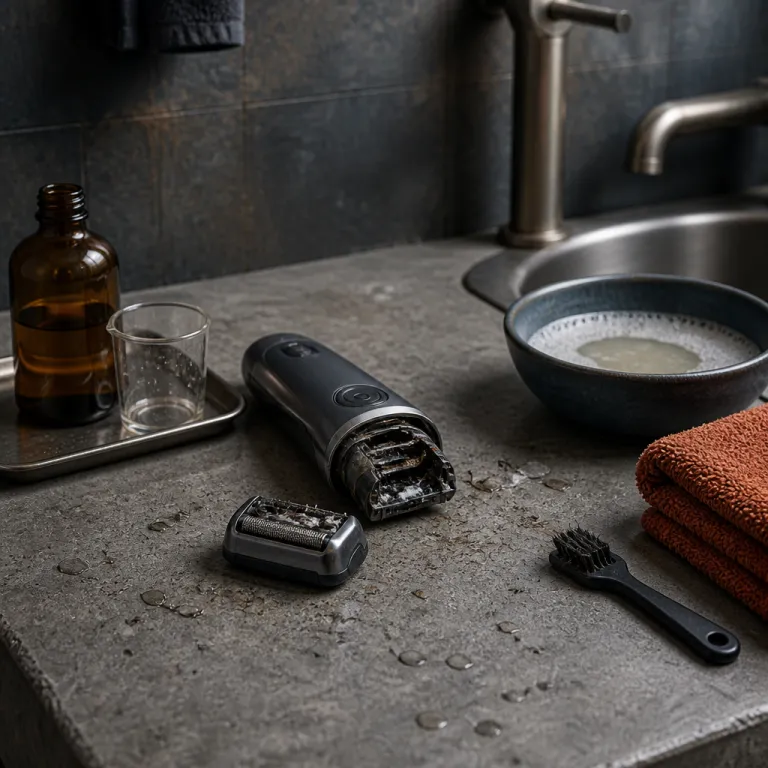
Why your electric shaver gets grimy faster than you think
Your electric shaver looks clean after a rinse, but the inside tells another story. Beneath the shaver head, dead skin cells, sebum from your face, short hair fragments and hard water minerals build a sticky paste that standard cleaning with plain water will not fully remove. That hidden gunk slowly dulls the blades, makes the electric razor louder and hotter, and turns a smooth shaving routine into tugging and irritation.
Every pass of the razor pushes microscopic hair and skin into the cutting block and under the foils or rotary shaver caps. Sebum acts like glue, so even if you clean electric shavers under the tap, the mix clings to the blades and the head frame, and over time hard water will leave mineral scale that simple liquid soap cannot always dissolve. If you want to understand how to clean electric shaver properly, you need to think less about what you see on the surface and more about what hides in the capture chambers and around each tiny cutting tooth.
Foil shavers such as a Braun Series 9 Pro or Panasonic Arc 5 pack very tight tolerances between foil and blades, while rotary shavers like a Philips Norelco 9000 trap debris in circular channels. That means a shaver waterproof design lets you rinse safely, but it also means the same waterproof seals keep old hair and dried lather locked inside unless your cleaning electric routine is thorough. The result is predictable ; the shaver will feel rougher on your neck, the motor works harder, and you start blaming the electric shaver when the real culprit is neglected maintenance.
Soap and hot water: what it really cleans and what it misses
Most men run the electric shaver under a hot tap, maybe add a drop of liquid soap, then call it clean. That basic cleaning with warm water will flush out loose hair and shaving foam, and on a shaver waterproof model from Braun or Philips it is safe for the seals and electronics. The problem is that hot water will not reliably dissolve oxidized sebum, dried skin film and hard water deposits that sit deep around the blades and inside the shaver head frame.
If you want to know how to clean electric shaver properly with soap, treat it like washing a greasy pan rather than rinsing a glass. Use a small amount of mild liquid soap, work it through the foils or rotary shaver slots while the electric runs, then rinse until the water runs clear and no bubbles remain. After that, open the head, remove the cutting block or rotary cages, and rinse those parts separately so trapped hair and residue do not migrate back into the clean shaver surfaces.
Once rinsed, shake off excess water and let every part air dry on a towel until they dry completely before reassembly, because closing a damp electric razor traps moisture that can corrode steel and weaken lubricants. Never store Braun shavers or Philips shavers in a closed case while wet, even if the shaver waterproof rating looks reassuring, since lingering humidity encourages odor and bacterial growth. For long term performance, pair this soap and water routine with periodic lubrication ; a tiny drop oil on each side of the cutting block or foil track keeps friction low and offsets the drying effect of repeated washing, much like the guidance in any serious guide to maintaining clippers with oil.
Alcohol, spray cleaners and what actually dissolves sebum and minerals
Once you have removed loose debris with water and a brush, you still have a thin film of skin oil and mineral scale that soap alone may not touch. This is where a dedicated spray cleaner or alcohol based solution can help clean electric shavers more deeply by dissolving sebum and disinfecting the blades. The trick is using enough chemistry to cut through residue without stripping every trace of lubricant from the razor mechanisms.
Most brand specific cleaning solution cartridges for a Braun Series station or Philips SmartClean base combine alcohol, a mild detergent and corrosion inhibitors, which together clean shaver heads, sanitize the blades and leave a light protective film. Generic spray cleaner products for an electric shaver or electric razors often use isopropyl alcohol with a surfactant ; they evaporate quickly, so they help parts dry completely and reduce rust risk, but heavy use without follow up oil can leave the cutting block running too dry. Isopropyl alcohol works well for disinfecting and breaking down skin oils, yet it does not dissolve hard water scale, so if your tap water is very mineral rich you still need mechanical cleaning with a brush or even careful use of compressed air.
For daily users, a practical pattern is simple ; rinse with warm water, let the shaver head air dry, then once a week apply a light spray cleaner and a drop oil on the moving joints. A few times a year, especially if you see white crust around foils or rotary tracks, remove the head, soak the parts in a mild liquid soap solution, then rinse and dry completely before lubricating. If you want a detailed walk through of how to use a cleaning brush correctly on electric shavers and electric razors without damaging delicate foils, a dedicated guide to maintaining your electric razor with a cleaning brush is worth reading and following step by step.
Cleaning stations vs manual care: when the machine is worth it
Cleaning stations promise to handle everything for you ; drop the shaver in, press a button, wake up to a clean shaver that smells like a barbershop. In practice, the value depends on how you shave, how coarse your hair is and how disciplined you are about manual cleaning electric routines. For a busy daily shaver who uses a Braun Series 9 Pro or similar foil razor on a dense beard, the station can genuinely extend blade life by flushing out gunk that water will never reach.
Those ultrasonic or motorized bases agitate the cleaning solution around the shaver head, pushing alcohol and detergent into the tight gap between foils and blades where sebum and micro hair fragments hide. On a rotary shaver from Philips, the station helps keep the circular channels clear, but you still need to open the head a few times a year to remove compacted hair that even circulating fluid cannot dislodge. The cartridges are mostly alcohol, surfactant and fragrance, so from a chemistry standpoint they are not magic ; they just combine consistent cleaning with forced drying, which means the shaver will be ready to use without waiting for it to air dry overnight.
If you shave only a few times a week, or you are comfortable rinsing, brushing and adding a drop oil yourself, a station is more convenience marketing than necessity. A mid range electric shaver or electric razor without a base, cleaned properly by hand, can keep its blades sharp for years, especially if you occasionally use compressed air to blow out stubborn dust from the shaver head hinges. The smart move is to treat the station as a time saver, not a performance upgrade ; the real gains come from consistent care, not from the logo on the base.
A realistic maintenance schedule that keeps your shaver cutting like new
Knowing how to clean electric shaver properly matters less than actually doing it on a schedule you can stick to. Think in three layers ; a quick daily rinse, a weekly lubrication and a monthly deep clean that tackles the gunk soap and water will not fully remove. This rhythm keeps electric shavers, whether foil or rotary shavers, running close to new without turning you into a hobbyist.
After each shaving session, tap the shaver gently to remove loose hair, pop off the shaver head and rinse under warm running water, then use a soft brush on the non foil surfaces only. Let the parts air dry on a cloth until they dry completely, then reassemble and, once a week, add a tiny drop oil to the sides of the cutting block or under the rotary caps while the electric runs for a few seconds. Once a month, perform a full cleaning electric routine ; open every removable piece, wash with diluted liquid soap, rinse thoroughly, pat dry, allow to air dry overnight, then apply a spray cleaner and fresh lubricant so the electric razors glide instead of scrape.
Hard water users should consider occasionally using distilled water for the final rinse, because this reduces mineral spotting that even alcohol cannot dissolve. If you notice more irritation or razor burn despite good prep, it is worth reading a focused analysis of what actually stops razor burn rather than blaming the shaver alone, since technique and skin prep matter as much as a clean shaver. In the long run, the best test of your routine is simple ; not the closeness in week one, but the closeness in year three.
FAQ
How often should I deep clean my electric shaver head ?
For most daily shavers, a monthly deep clean of the shaver head is enough to prevent sebum and mineral buildup. If you have very oily skin or hard water, aim for every two weeks instead. Signs you waited too long include louder noise, more heat and visible residue around the blades.
Can I use regular hand soap to clean my electric razor ?
Mild liquid hand soap works well for routine cleaning as long as you rinse thoroughly. Avoid very thick or moisturizing soaps, because they can leave extra film inside the shaver head. Whatever soap you choose, always let the parts dry completely before reassembly.
Is isopropyl alcohol safe for all electric shavers and razors ?
Isopropyl alcohol is generally safe on metal blades and plastic frames, but it can dry out lubricants and some rubber seals if overused. Apply it sparingly after washing, then follow with a drop oil on the moving parts. Check your manual first, because a few models warn against strong solvents on painted surfaces.
Do I really need a branded cleaning station for my Braun or Philips shaver ?
Branded stations for Braun shavers or Philips shavers are convenient, especially for heavy daily use, but not mandatory for performance. A careful manual routine with water, soap, a brush, occasional spray cleaner and lubrication can keep an electric shaver working just as well. The station mainly saves time and automates drying rather than unlocking extra cutting power.
Why does my shaver smell bad even after rinsing with water ?
A bad smell usually means trapped sebum, bacteria and old hair inside areas that water will not reach. Perform a full disassembly, wash parts with liquid soap, use alcohol or a spray cleaner on the blades, then let everything air dry completely. Regular weekly cleaning and leaving the shaver open to dry between uses prevents the odor from returning.