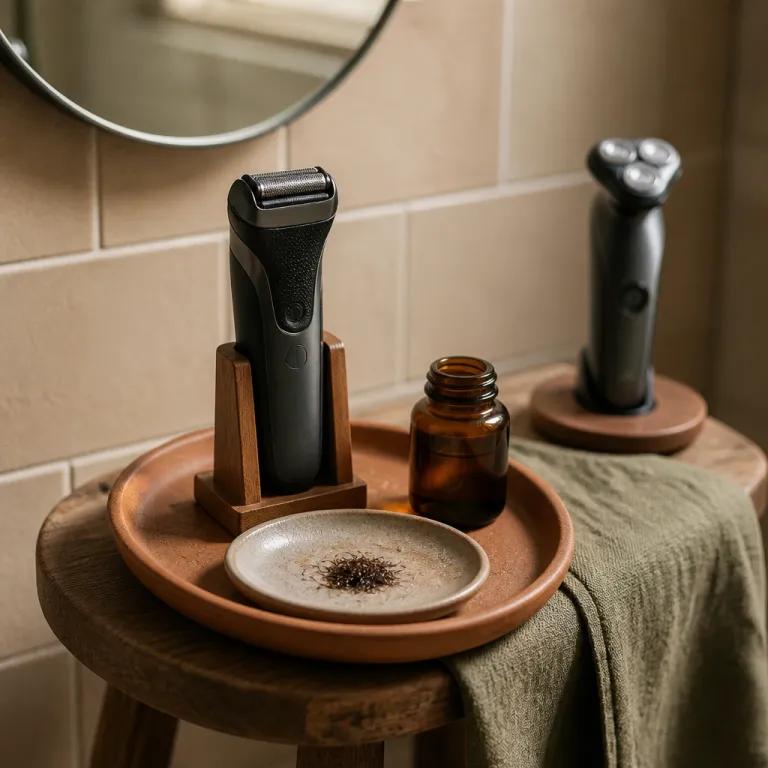
Why rotary shavers became the default for bald heads
For years, anyone asking how to shave a bald head heard one answer. Most barbers and grooming forums pushed the idea that a rotary shaver with circular heads simply handled scalp contours better. That is how the debate around how to shave a bald head with a foil versus a rotary shaver started from a position already tilted toward rotary razors.
The logic was simple enough, because early electric shavers with foil heads were flat, rigid and unforgiving on bumps. Rotary shavers, especially Philips Norelco models, used three floating circular heads that pivoted and flexed, so they could work around the crown, the back of the head and the neck without constant angle changes. For users with sensitive skin on the scalp, that meant fewer nicks, less razor burn and less fear when they moved from beard shaving on the face to full head shaving.
Rotary shavers also tolerated longer hair better, which mattered when someone let their head hair grow for a few days. A rotary shaver could grab slightly longer hair that lay flat, while many early foil shavers simply pushed those hairs around. In early foil rotary comparison tests reported by reviewers, rotary shavers were often called the best option for head shaving, while foil shavers were framed as tools mainly for the face and beard.
How modern foil shavers closed the contouring gap
The picture changed once premium foil shavers gained fully flexible heads and stronger motors. Panasonic’s Arc 5 and Arc 6 lines brought multi directional flex, with some heads rated for movement in up to 20 directions in manufacturer specs, which let a foil shaver track the scalp almost like a rotary shaver. When you compare how you shave a bald head with a foil versus a rotary shaver today, the old contouring advantage is far less clear.
High end foil shavers such as the Braun Series 9 Pro and the latest Panasonic Arc models use linear motors that maintain cutting speed even through thick coarse hair. Braun, for example, lists around 40,000 cutting actions per minute for the Series 9 Pro in its product literature, and independent reviewers such as Wirecutter and Good Housekeeping consistently note that these foil shavers stay fast under load and feel smoother on the scalp than older foil razors.
These modern foil shavers also integrate better skin protection, with refined skin foil patterns that lift and guide hair into the cutters while shielding the scalp. When you read a detailed buying guide about choosing the best foil shaver for your face, you will see the same design principles now applied to head shaving. In one user panel cited by Wirecutter, more than half of testers reported noticeably less post shave redness on the scalp with a premium foil shaver compared with their older rotary models, which helps explain why many experienced electric shavers who once relied on rotary razors for their heads now run a single foil shaver for both face and scalp, especially when they want a very close shave without using traditional razors or shaving cream every day.
Closeness versus comfort: where foil and rotary really differ
When you strip away marketing, the core question is simple. For a person with sensitive skin who wants to shave a bald head, does a foil or a rotary shaver leave the scalp smoother with less irritation. In repeated tests across different hair types by reviewers and user panels, foil shavers still cut closer than rotary shavers, while rotary razors remain slightly gentler on bumps and moles.
A good foil shaver, such as the Braun Series 9 Pro or a Panasonic Arc 5, behaves almost like a guarded traditional razor on the scalp. The skin foil is thin, the cutters move fast and the head stays stable, so each pass removes more hair at the base, which is why many users feel almost glass smooth skin after a careful shave. Rotary shavers like the Philips Norelco 9000 or the Philips Norelco Head Shaver Pro series use circular heads that roll over the scalp, and their rotary razors tend to leave a faint shadow sooner, but they can feel softer on raised areas.
Comfort also depends on technique, especially for sensitive skin that already reacts badly to electric razors on the face. With a foil shaver, you move mostly in straight or slightly curved lines, keeping the head flat and letting the electric motor do the work, while with a rotary shaver you use small circular motions that follow the shape of the skull. Articles that explain why rotary shavers still win on jawlines even when foils shave closer highlight the same trade off you feel on the head, where foil rotary comparisons come down to whether you value ultimate closeness or maximum forgiveness on tricky skin.
Real world picks for shaving a bald head with sensitive skin
For daily head shaving on sensitive skin, a high end foil shaver is usually the better long term tool. The Braun Series 9 Pro, the latest Braun Series 8 and the Panasonic Arc 5 all combine strong motors, refined skin foil designs and flexible heads that track the scalp without needing heavy pressure. If you want one electric shaver for both face and head, these foil shavers handle beard hair and scalp hair equally well, especially when the hair is kept short.
Rotary shavers still have a place, particularly if you often let your head hair grow for several days or if your scalp has many bumps or moles. The Philips Norelco Head Shaver Pro series, with its multiple ComfortCut blades, 360 degree flex and Hair Collect system, is designed specifically for heads rather than beards, and its circular heads can work around the crown with minimal effort. Users who already like the feel of a Philips Norelco rotary shaver on the face may find that a dedicated head model gives them enough closeness without the sting they sometimes feel from a foil razor.
To make the choice easier, the table below summarises key specs and trade offs for popular models, using typical manufacturer data and independent test findings.
| Model | Type | Motor / power | Typical runtime | Wet / dry | Recommended head replacement | Noted pros | Common cons |
|---|---|---|---|---|---|---|---|
| Braun Series 9 Pro | Foil | Linear motor, ~40,000 cutting actions/min (Braun spec) | Up to ~60 min | Yes | About 18 months | Very close shave, gentle on sensitive scalp, strong on dense hair | Premium price, larger head can feel bulky on small skulls |
| Braun Series 8 | Foil | High speed motor, slightly below Series 9 | Up to ~60 min | Yes | About 18 months | Good balance of cost, comfort and closeness | Not quite as fast on very coarse growth |
| Panasonic Arc 5 | Foil | Linear drive, ~14,000 cycles/min (Panasonic spec) | Around 45–60 min | Yes | About 12–18 months | Extremely close shave, multi directional flex head | Can feel a bit aggressive on very reactive skin |
| Philips Norelco 9000 | Rotary | Rotary motor with individual floating heads | Up to ~60 min | Yes | About 12–24 months | Excellent contour following, quiet and smooth feel | Not as close as top foil shavers on the scalp |
| Philips Norelco Head Shaver Pro | Rotary | Rotary motor tuned for head shaving | Around 45–60 min | Yes | About 12–24 months | Designed for bald heads, easy around crown and neck | Best on short stubble, less ideal for full beards |
If you are unsure where to start, look at independent tests that compare the best electric shavers for head shaving across both foil and rotary designs. Pay attention to battery durability, because many mid range electric shavers lose runtime after a couple of years, and check whether the model supports wet dry use with shaving cream if your skin needs extra glide. For some users, pairing a foil shaver for the closest daily shave with a simple set of hair clippers for occasional longer growth offers a flexible system that respects both hair type and scalp sensitivity.
Technique, maintenance and long term comfort on a bald scalp
Even the best electric razors will punish poor technique on a bald head. Start by trimming longer hair with hair clippers if it is more than a couple of millimetres, because both foil shavers and rotary shavers work best on short stubble. When you actually shave a bald head with a foil versus a rotary shaver, keep pressure light, stretch the skin gently with your free hand and let the electric shaver glide rather than dig.
With a foil shaver, move in overlapping straight lines, going against the direction of hair growth on the scalp, then across it, to catch stubborn hair that lies flat. With a rotary shaver, use slow circular motions, changing direction around the crown and the back of the head, where blind spots hide missed hair and where sensitive skin often reacts first. For both types, wet dry models allow you to use shaving cream or gel, which can reduce friction and help people with thick coarse hair or very reactive skin tolerate daily shaving.
Maintenance matters as much as the initial choice between foil and rotary razors, because dull blades force you to press harder and that ruins comfort. Rinse the heads after every shave, open the cassette or rotary heads weekly to clear trapped hair, and replace foils, cutters or rotary heads at the intervals recommended by Braun, Panasonic or Philips Norelco. Over several years, the shaver that truly works better is not just the one that felt sharp in the first month, but the one whose heads stay efficient, whose battery still holds a charge and whose skin foil or circular heads remain kind to your scalp.
FAQ
Is a foil shaver or a rotary shaver better for a first time head shave
For a first full head shave on sensitive skin, a modern foil shaver usually gives a closer result with fewer passes. However, a rotary shaver can feel less intimidating because its circular heads glide easily over the scalp and forgive small mistakes. If you are nervous, you can start with a rotary shaver, then move to a foil shaver once you understand your scalp’s contours.
Can I use the same electric shaver on my face, beard and bald head
Many high end electric shavers are designed to handle both face and head, especially premium foil shavers from Braun and Panasonic. If your beard and scalp hair have similar thickness, one foil shaver can manage both areas as long as you clean it thoroughly between uses. Users with very thick coarse beard hair sometimes prefer a dedicated beard shaver and a separate head shaver to reduce wear on each razor.
Does shaving cream help when using electric razors on a bald head
Shaving cream or gel can significantly improve comfort when using wet dry electric razors on a bald scalp. A thin layer reduces friction, helps the foil or rotary heads glide and can calm sensitive skin that normally reacts to dry shaving. Just make sure your electric shaver is rated for wet dry use before bringing it into the shower or sink.
How often should I replace foil, cutters or rotary heads on my shaver
Most brands recommend replacing foil and cutter sets or rotary heads every 12 to 24 months, depending on usage. Daily head shaving wears parts faster than occasional beard trimming, so bald head users may need new heads closer to the earlier end of that range. If you notice more passes, extra heat or increased irritation, that is a sign your razor parts are due for replacement.
What is the best way to handle the back of the head when shaving blind
The back of the head is challenging because you work mostly by feel rather than sight. Use your free hand to guide the shaver, moving slowly in systematic patterns, either straight lines with a foil shaver or overlapping circles with a rotary shaver. A small handheld mirror can help at first, but over time you will learn the contours and rely more on touch than on vision.