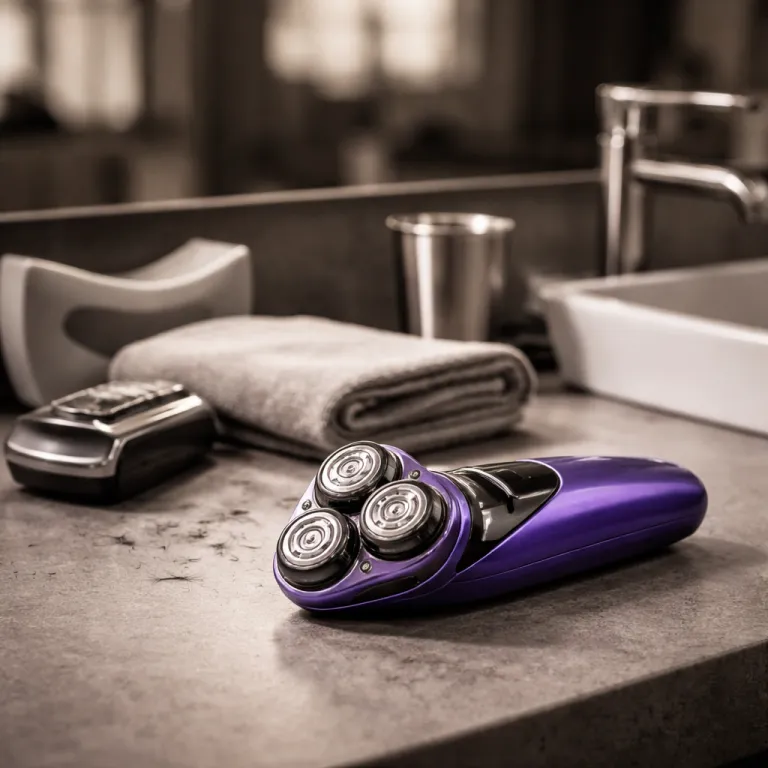
Rotary shaver advantages on real faces, not mannequin jaws
Foil shavers win lab tests for closeness on flat cheeks and upper lips. In daily shaving on a real face with curves and hollows, rotary shavers often feel better because each rotary head pivots independently and keeps contact where foil shavers float in mid air. That mechanical difference is where the main rotary shaver advantages start for men with tricky jawlines and sensitive skin.
Think about the classic jawline test between your earlobe and chin where the bone curves sharply. A flat foil shaver head, even on a premium Braun Series 9 Pro, loses around a quarter of its cutting surface as the frame lifts off the skin while the oscillating blades keep moving but stop cutting efficiently. A three head rotary shaver such as the Philips Norelco 9000 keeps all three rotary heads in contact, so the blades keep cutting hair instead of just polishing skin and creating razor burn.
Rotary shavers work by pulling facial hair into circular slots while the internal cutting rings spin, which is a different action from the straight line motion of foil shavers. That circular motion lets a rotary shaver glide around the Adam’s apple and over neck tendons without you constantly tilting the electric shaver or stretching the skin awkwardly. If you mainly shave every two or three days and have coarse hair on the neck, this way rotary shavers and other electric razors handle longer stubble in fewer passes can be better for your skin.
How foil and rotary shavers work on curves and contours
Under the grille of a foil shaver you find straight oscillating blades that move side to side at high speed. Those blades are fantastic for cutting short hair on flat surfaces, which is why foil shavers like the Panasonic Arc 5 feel so efficient on the cheeks and upper lip. The problem appears when that same electric razor reaches the hollow beside the Adam’s apple or the sharp angle of the jaw where the flat shaving head cannot stay fully in contact.
Rotary shavers attack the same job with three or sometimes five separate shaving heads mounted on flexible pivots. Each rotary head can tilt, flex and rotate independently, so the electric shaver behaves almost like a ball joint following the face rather than a rigid bar scraping across it. On the neck, where men with sensitive skin often suffer razor burn, this independent movement is one of the most practical rotary shaver advantages.
If you want a deeper explanation of how foil shavers work for a smooth shave, a technical guide on foil shaver mechanics shows why they excel on flat planes but struggle on complex geometry. In our tests, the Adam’s apple was the repeat failure point where even a high end Braun Series 8 foil rotary style hybrid needed extra passes and manual tilting. A Philips Norelco rotary shaver with three contour following heads simply rolled around the cartilage, kept the blades cutting and left less irritation on the skin.
Rotary shaver advantages for sensitive skin and coarse hair
Men with sensitive skin usually care less about theoretical closeness and more about avoiding razor burn and ingrown hairs. On flat areas a foil shaver can cut 0.1 to 0.2 millimetres closer than a comparable rotary shaver, but that difference is invisible to the eye and fingertip once you rinse your face. What you do feel is whether the electric shaver forced you into five passes over the same patch of skin or cleared the hair in two.
Rotary shavers tend to win that efficiency battle on curved necks and chins, especially when dealing with coarse hair that grows in multiple directions. Because each shaving head can flex and maintain contact, the blades keep cutting instead of skipping over low spots, so you need fewer strokes and the skin suffers less friction. For a man who already has redness, that is one of the most meaningful rotary shaver advantages compared with many foil shavers.
Some men with very reactive skin still prefer a single foil shaver because a simpler shaving head can feel more predictable and easier to clean. If that sounds like you, a guide on why a single foil shaver could be the right choice for your grooming routine explains when a compact foil rotary hybrid design makes sense. For everyone else with mixed facial hair patterns and a bony neck, a well designed shaver rotary model such as the Philips Norelco 7000 series or 9000 series often balances comfort, cutting power and control better than most electric shavers.
Speed, stubble and the reality of daily electric shaving
Real men do not always shave every morning, and electric shavers face a tougher job on two or three day growth. Foil shavers with very fast oscillating blades, like the Panasonic Arc 5, can mow down short stubble quickly on the cheeks but slow dramatically when the hair gets longer and lies flat on the neck. Rotary shavers, by contrast, tend to pull longer facial hair into their circular slots more effectively, so the rotary shaver advantages grow as the time between shaves increases.
In side by side tests on coarse hair left for three days, a Philips Norelco rotary shaver cleared the neck in two slow passes where a Braun Series 7 foil shaver needed four or five. Those extra passes are where razor burn and redness start, especially on sensitive skin under the jaw and around the Adam’s apple. If you often shave in a hurry with a dry electric routine, a rotary electric shaver can be the better compromise between speed, comfort and closeness.
Wet dry models complicate the picture slightly because adding a slick layer of gel or foam changes how shavers work on the skin. A wet dry foil shaver can glide more easily over curves, but the flat head still loses contact sooner than three floating rotary heads. For men who like to shave in the shower, a waterproof rotary shaver with a flexible shaving head and well designed cutting chambers usually handles both daily and occasional shaves with fewer missed hairs and less irritation.
Where foil still wins and when to choose rotary instead
Not every face benefits equally from rotary shaver advantages, and that matters when you spend serious money on an electric razor. If your facial hair is fine, straight and mostly grows on relatively flat cheeks with a modest jawline, a high quality foil shaver like the Braun Series 9 Pro or Panasonic Arc 5 will probably feel best. Those razors use ultra thin foils and very fast oscillating blades to give a close shave that rivals a manual razor on those easy surfaces.
The rotary camp becomes more persuasive as your facial geometry gets more complicated and your skin more reactive. Men with prominent neck muscles, a pronounced Adam’s apple or scarring often find that foil shavers either miss patches or cause razor burn where the head keeps bouncing on and off the skin. In those cases, a three head rotary shaver with independently pivoting heads and a forgiving shaving head design usually offers better contact, fewer missed hairs and a calmer skin barrier.
There is also a convergence trend where foil rotary hybrids try to steal each other’s strengths, with Braun FlexMotion and Panasonic Multi Flex heads adding more movement to foil shavers. Those systems help, but they still rely on a single frame, while rotary shavers keep each head on its own pivot and maintain 360 degree contact. When you weigh the trade offs honestly, foil is best for flat faces chasing ultimate closeness, while rotary shavers are best for complex faces chasing reliable comfort over the long term.
Practical buying guide for men choosing between foil and rotary
Choosing the best electric shaver starts with mapping your own face, not reading spec sheets. Run your fingers along your jaw, feel how sharply it drops from ear to chin and notice how the skin bunches around the Adam’s apple. If you feel steep angles, hollows or old scars, you are exactly the kind of man who will notice rotary shaver advantages every single morning.
Next, think about your shaving habits and how often you let facial hair grow beyond one day. Daily shavers with fine hair on mostly flat faces can safely prioritise a premium foil shaver, while men who shave every two or three days and have coarse hair on the neck should lean toward rotary shavers. If you also cut your own hair, a guide to hair clipper sizes for low maintenance haircuts can help you match your beard length and haircut routine to the same practical mindset.
Finally, pay attention to cleaning and maintenance because clogged blades turn any shaver into a skin torture device. Rotary shavers with easy open heads and clear rinse paths stay kinder to sensitive skin over time, while neglected foil shavers with worn foils can start to scratch and cause razor burn. The smartest buy is not just the electric shaver that feels great in week one, but the razor that still shaves comfortably in year three.
FAQ
Are rotary shavers better than foil shavers for sensitive skin
For many men with sensitive skin and complex neck contours, rotary shavers are better because their independent heads maintain contact without repeated scraping. Foil shavers can still be excellent on flat cheeks and upper lips, but they often need more passes on the jaw and Adam’s apple. Fewer passes usually mean less razor burn and less redness over time.
Do rotary shavers give as close a shave as foil models
On flat areas, high end foil shavers can cut slightly closer than rotary shavers, but the difference is tiny and hard to feel. On curved areas like the neck and jaw, rotary shavers often feel effectively closer because they miss fewer hairs in hollows. For most men, the comfort difference matters more than the microscopic closeness gap.
Should I choose a wet dry rotary shaver or a dry electric foil shaver
If you like shaving with gel or in the shower, a wet dry rotary shaver offers flexibility and usually handles longer stubble well. A dry electric foil shaver is convenient for quick daily touch ups, especially on flat areas. Your choice should follow your routine, skin sensitivity and how often you skip days between shaves.
How often should I replace the blades and heads on an electric shaver
Most manufacturers recommend replacing rotary heads or foil and cutter sets every 12 to 18 months, depending on usage. Men with coarse hair or daily shaving habits may need new blades slightly sooner to maintain comfort. Dull parts force more passes and increase the risk of razor burn and tugging.
Can rotary shavers handle very coarse facial hair
Modern rotary shavers are designed to handle coarse facial hair by pulling longer strands into their cutting slots. They usually cope better than many foil shavers when you shave every two or three days instead of daily. If your beard is extremely dense, choosing a powerful rotary shaver from a higher series range will help maintain speed and comfort.