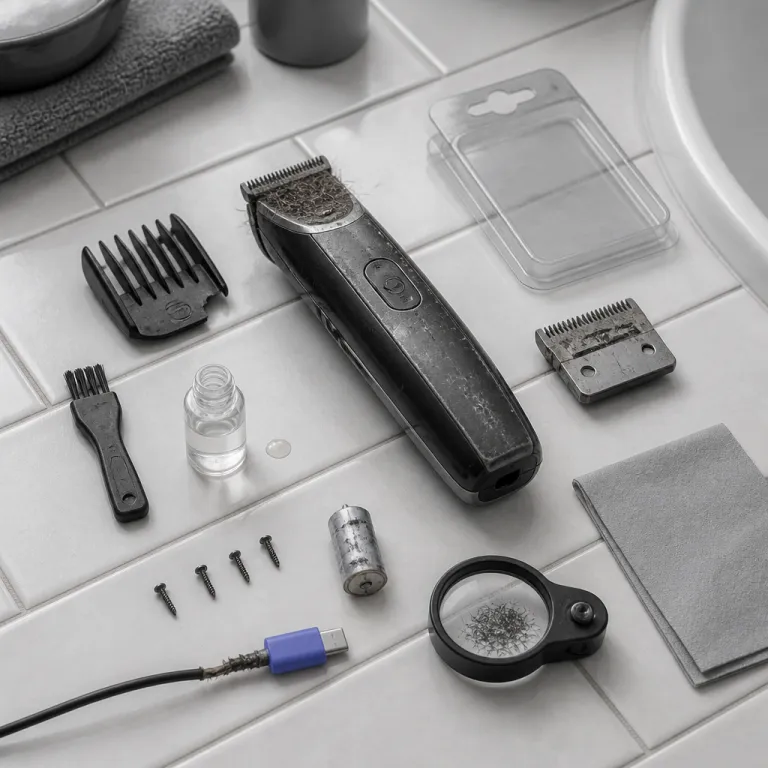
When a beard trimmer is not cutting properly, start with the blades
A beard trimmer not cutting properly usually starts with its blades, not the battery. When the blade edge rounds off, it stops shearing hair cleanly and begins to push and snag, so your beard feels tugged instead of sliced. That is the moment when a quick grooming routine becomes a slow, slightly painful chore.
Look closely at the blade teeth under good light and you will often see tiny nicks or shiny flats where the blades dull over time. Those dull blades force the motor to work harder, which reduces cutting performance and makes the whole unit vibrate more loudly than when new. If you notice the blades cutting less efficiently even after cleaning, that is your first warning sign that the trimmer will soon feel like it simply will not cut at all.
Regular maintenance delays this slide, but it cannot stop it forever because friction always wins over blades time. Brush out trapped hair after every trim, then add a drop of clipper oil to the moving blade clipper rail every three or four uses. This keeps the clipper blades cooler, reduces wear on the blade drive, and helps the trimmer keep cutting properly for months longer.
When a beard trimmer not cutting properly persists after oiling, you should check blade alignment next. If the fixed blade and moving clipper blade are no longer parallel, they will cut hair unevenly and leave random long strands in your beard. Misaligned blades cutting at an angle also increase the risk of irritation because the teeth scrape skin instead of gliding over it.
Many modern hair clippers and beard trimmers use snap on blade cartridges, so replacing them is cheaper than buying a new unit. With brands like Andis, a fresh andis blade can transform clippers cutting that felt rough into something close to new again. The same logic applies to a compact philips groomer or a travel hair clipper, where a new blade set restores cutting performance without touching the motor or battery.
Motor slowdown and power loss under thick coarse beards
The second sign of a beard trimmer not cutting properly is motor slowdown whenever it meets thick coarse patches. A healthy motor keeps a steady pitch as it cut hair, even when you move from light stubble to a dense moustache or jawline. When the sound drops in tone and the blades hesitate, the trimmer is telling you it is struggling for power.
This slowdown can come from two places, and both matter for long term performance. First, a worn blade drive converts less of the motor rotation into linear cutting motion, so the blades cutting speed falls even if the motor itself spins normally. Second, lithium ion battery cells lose capacity after a few hundred full charge cycles, which means the motor no longer receives the same voltage under load and the clippers cutting power sags exactly when you need it most.
You will notice this most clearly when you try to trim a multi day beard at your usual guard setting. The trimmer starts strong, then within a minute the motor note drops and the blade clipper teeth begin to skate over the surface instead of biting in. That is the moment when you see lines of hair left behind and feel the unit almost won cut through dense areas without multiple passes.
Some models handle this better than others because of stronger motors and smarter electronics. High end foil shavers like the Braun Series 9 Pro and linear motor designs such as the Panasonic Arc 5 maintain near constant cutting speed until the battery is almost empty, while cheaper clippers cutting systems fade much earlier. If you want to understand how chassis design and guards affect this, a detailed guide on why metal clipper guards matter for your electric shaver explains how stable guard geometry helps any blade cut more consistently.
When a beard trimmer not cutting properly coincides with a battery that drops from full to half in a few minutes, you are seeing the combined effect of dull blades and tired cells. You can replace clipper blades or an andis blade cartridge, but you cannot easily swap a sealed battery in most consumer units. At that point, the reasons clipper performance feels weak are structural, and it may be more rational to retire the trimmer than to chase marginal gains.
Uneven length, missed patches and blade alignment drift
A third warning sign that a beard trimmer not cutting properly is on its way out is uneven length on the same guard setting. You run the trimmer over your cheeks, and one side looks tight while the other shows random longer hair that should have been removed. That inconsistency is rarely your technique and more often a symptom of mechanical drift inside the cutting head.
Over time, micro impacts from bathroom drops or knocks in a gym bag can bend the guide rails that hold the blade in place. When blade alignment shifts even slightly, one corner of the blade sits closer to the guard than the other, so it cut hair shorter on one side and leaves stubble longer elsewhere. You will see this especially clearly when trimming a defined beard line along the neck, where a straight guard pass should produce a crisp edge but instead leaves a wavy or stepped finish.
Another culprit is wear in the plastic tracks that support the moving blade clipper assembly. As those tracks loosen, the blade can rock side to side, which again changes the effective cutting length and reduces cutting performance. No amount of oil or cleaning will fix this because the problem is not blades dull but the geometry that guides them.
At this stage, some men try to compensate by pressing harder or making more passes, which only accelerates wear and increases irritation. If you are also noticing that the trimmer head heats up faster, that is a sign the motor is working harder to keep the blades cutting despite the misalignment. For head shavers using balding tools, a specialist guide on balding clippers for a clean bald head shows how precise blade alignment is even more critical when you are cutting to almost zero length.
When a beard trimmer not cutting properly shows both uneven results and audible rattling from the head, the internal tolerances have usually opened up beyond what home repair can address. You might replace the clipper blade or even the full cutting cassette, but if the frame that holds those parts is worn, new blades cutting against a loose track will degrade quickly. In that case, the reasons clipper results look patchy are baked into the housing, and a new unit is the only reliable fix.
Battery fade, charging quirks and the economics of repair
The fourth sign that a beard trimmer not cutting properly is heading toward retirement is a battery that no longer behaves like it used to. When new, a decent trimmer should give several full beard trimming sessions on one charge, with the motor tone staying stable until the last minutes. As lithium cells age, they lose capacity and voltage stability, so the motor sags earlier and the blades cutting speed drops even when the indicator still shows charge remaining.
You will notice this as a creeping change rather than an overnight failure. First, you need to recharge more often, then you realise that the trimmer will not finish a full beard trim without plugging in, and finally it starts to shut off under load even though the light claims there is power left. That is the classic lithium degradation curve, and once it sets in, no amount of oil, cleaning or new clipper blades can fully mask the loss of power.
Some premium models now use USB C charging and smarter battery management, which helps slow this decline but does not eliminate it. A compact philips groomer or a travel friendly Braun unit may still feel strong for years, yet after hundreds of cycles the internal resistance rises and the motor cannot draw enough current to maintain cutting performance on thick coarse hair. When that happens, the trimmer feels like it simply will not cut properly unless it is tethered to the wall.
At this point, you face a simple economic question about your grooming kit. If your beard trimmer not cutting properly is otherwise solid, with tight blade alignment and a robust housing, replacing the battery through an authorised service centre can make sense, especially on high end models. On cheaper clippers cutting tools where the service cost approaches the price of a new unit, it is usually smarter to replace the whole trimmer and start fresh with a strong motor and fresh battery.
Before you decide, test the rest of the system honestly. If the blades dull quickly, the blade drive feels loose, and the housing creaks, then a new battery will only mask deeper reasons clipper performance feels weak. In that case, looking at a well reviewed mid range shaver with a reliable integrated trimmer, such as the Philips 3000 Series tested in depth on this electric shaver review page, will give you a more dependable long term solution.
When maintenance no longer helps and it is time to replace
The final and most decisive sign that a beard trimmer not cutting properly is truly dying is when good maintenance no longer changes anything. You clean the head thoroughly, you oil the blade, you charge the battery fully, and yet the trimmer still pulls, misses patches and leaves your beard looking untidy. At that point, the problem is not neglect but accumulated wear across multiple components.
Think of the system as a chain made of the motor, the blade drive, the clipper blade, the guard and the battery. When blades dull, the motor has to work harder, which stresses the blade drive and accelerates play in the mechanism, while a weakening battery starves the motor of power and makes every cut hair feel like a struggle. Once several of these links are compromised, the trimmer will never return to its original cutting performance, no matter how carefully you groom or how often you oil the blades.
There is also a comfort threshold that matters more than many men admit. If every trim session ends with redness, tugging and the sense that the trimmer almost won cut through dense areas, you will start avoiding grooming or rushing it, which only makes results worse. A reliable tool should make trimming feel routine, not like a small battle every single time.
When you reach this stage, replacing only the clipper blades or an andis blade cartridge is usually a temporary fix at best. The underlying reasons clipper heads feel rough often include worn blade alignment tracks, tired motors and fatigued plastics, all of which sit beyond the blade itself. Investing in a new unit with a strong motor, stable guards and easily replaceable blades will save you both time and irritation over the next few years.
In the end, the real test of any beard trimmer not cutting properly is not how it behaves on day one but how it feels after years of regular use. The best tools combine sharp blades, consistent power and durable mechanics so that your grooming routine stays predictable and comfortable. What matters is not the closeness in week one, but the closeness in year three.
FAQ
Why is my beard trimmer pulling hair instead of cutting it ?
When a beard trimmer starts pulling hair, the most common causes are dull blades and reduced motor power. As blades dull, they push and snag instead of slicing, especially on thick coarse beards. If a full charge and fresh oil do not help, the cutting edges or blade drive are likely worn.
Can I fix a beard trimmer not cutting properly with new blades only ?
Replacing the blade or clipper blades often restores performance if the motor, battery and blade alignment are still sound. This works particularly well on modular systems from brands like Andis, where an andis blade cartridge can be swapped easily. If the trimmer still struggles after a new blade, deeper wear in the mechanism is probably to blame.
How often should I oil my trimmer blades for best performance ?
Most manufacturers recommend adding a drop of clipper oil every three or four uses. Regular lubrication reduces friction, keeps blades cutting cooler and slows down wear on the blade drive. Skipping oiling accelerates dull blades and makes the motor work harder than necessary.
When is it better to replace the whole trimmer instead of just the blade ?
If your trimmer shows several problems at once, such as weak battery life, noisy operation, uneven trimming and a beard trimmer not cutting properly even with a new blade, replacing the entire unit is usually more cost effective. A new device gives you a fresh motor, strong battery and tight blade alignment in one step. Repairing multiple worn parts on an old chassis rarely delivers the same long term reliability.
Does beard thickness affect how long a trimmer lasts ?
Yes, thicker and coarser beards put more load on the motor, blades and battery. Heavy use on dense hair dulls blades faster and makes the blade drive and bearings wear sooner. If you have a very thick beard, choosing a trimmer with a strong motor and easily replaceable blades will extend its useful life.