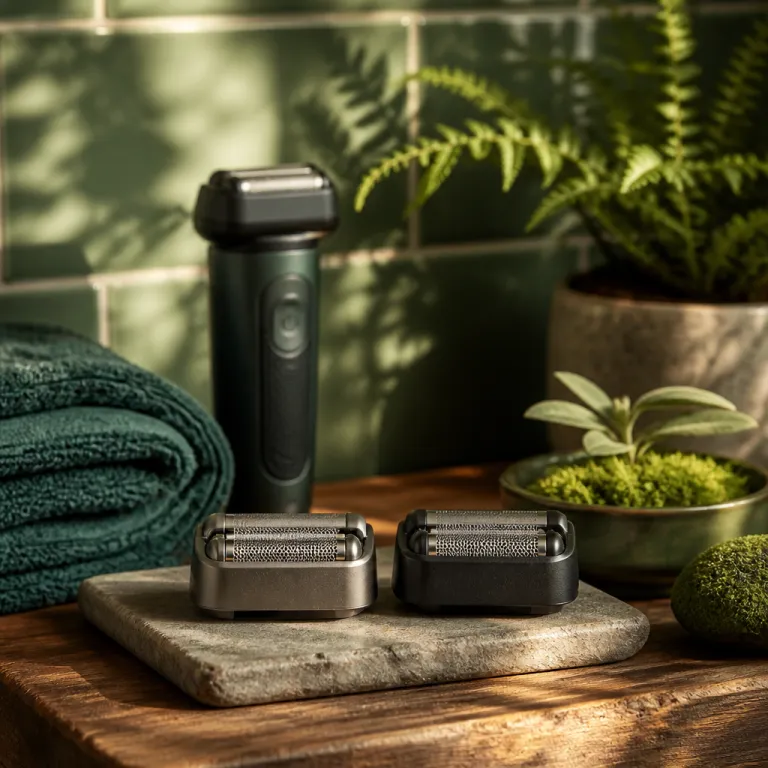
Why third party shaver replacement heads quality matters more than price
Most people look at a cheap replacement shaver head and see easy savings. A journalist who has torn down dozens of electric shavers sees a precision cutting system where the blades and foil live or die on micrometre level tolerances. If that system is off by a fraction, your close shave turns into tugging, redness and a shaver that suddenly feels older than it is.
Every electric shaver head is built as a matched pair of moving blades and stationary foils, and the gap between them decides whether stubble is cut cleanly or hair is yanked. With premium Braun cassettes such as the 94M and 96M, the brand uses a Titanium Nitride (TiN) coating on selected cutting elements to keep the razor blades sharp longer; Braun’s own product literature highlights this coating as a wear-resistant layer, and that coating is one reason third party shaver replacement heads quality is so hard to copy. When a low cost replacement head skips that coating or uses recycled steel, the edge dulls quickly and the comfortable shave you enjoyed on day one fades fast.
Think of the shaver head as the engine of your electric razor, while the motor and battery are just the fuel and chassis. If the parts and accessories that touch your skin are poorly machined, even the best men’s electric shaver models cannot give a close shave without irritation. That is why feedback from long term reviews often mentions that a cheap shaver replacement feels like a perfect replacement in week one, then starts leaving rough patches and missed hair by month three.
Brand engineers design specific shaver heads for each family of shaver models, and they tune the blade geometry, spring pressure and foil thickness together. When a third party factory claims its replacement heads will fit every Braun Series 5, 7 and 9 electric shaver, that promise usually ignores the subtle differences that protect your skin. The wrong fit might still click into place, but the head can rattle, the black plastic frame can flex and the blades can ride too high or too low against the foil. That is when third party shaver replacement heads quality stops being a bargain and starts quietly wrecking your shave.
How precision design makes or breaks a replacement head
Under a microscope, a genuine Braun or Panasonic replacement head looks almost boringly consistent. The foil holes are uniform, the inner blades sit at the same height and the polished edges show why these parts cost more than a generic product from an unknown factory. That consistency is what lets a modern electric shaver glide over your face and still cut short hair right at skin level.
Original manufacturers control three things that third party shaver replacement heads quality often fails to match, starting with the blade to foil gap that decides whether you get a close shave or a rash. Internal service manuals and patent filings from major brands typically describe clearances in the low tens of micrometres, which is far tighter than most aftermarket cassettes can reliably hold. They also choose specific stainless steel grades and coatings, such as the Titanium Nitride on Braun 94M cassettes, which resist wear and keep razor blades sharper for the full recommended replacement interval. Finally, they design the arc or curve of the foil so that the shaver head stays in contact with flat cheeks and tricky jawlines without digging in.
Panasonic foil shaver models such as the Arc 5 and Arc 6 rely on extremely precise arc geometry, and even a slight error in third party replacement blades can lift the cutting edge away from the skin. That is why many users report that generic parts feel free of issues on day one but slowly lose efficiency, forcing more passes and more pressure for the same shave. When that happens, the electric razor motor works harder, heat builds up in the head and the comfortable shave you paid for turns into a noisy, hot compromise.
Rotary electric shavers from Philips Norelco are more forgiving, because each circular head floats independently and can mask small differences in fit. Even there, though, poor machining on the combs or inner cutters can leave tiny burrs that scrape the skin and trap hair clippings, which hurts both comfort and hygiene. If you care about the long term health of your skin and your electric shavers, it is worth reading detailed reviews and technical breakdowns of stainless steel razor blades in electric shavers before trusting a very cheap replacement head.
When third party heads are acceptable, and when they are a bad bet
Not every third party shaver replacement is a disaster waiting to happen. Some independent manufacturers produce high quality replacement shaver heads for older Braun Series 3 or Philips Norelco rotary shaver models, where the tolerances are looser and the designs are simpler. In those cases, a carefully chosen generic head can be a perfect replacement that restores a tired electric shaver without draining your budget.
The risk climbs sharply with premium foil systems that chase the closest possible shave, because those designs depend on ultra tight blade to foil gaps. Panasonic Arc 6 and Arc 5 models, along with the latest Braun Series 9 Pro, use complex multi part cassettes where each cutting element is tuned to a specific pressure and angle. For these shaver heads, third party shaver replacement heads quality often falls short, and a cheap cassette can turn a flagship men’s electric razor into something that feels worse than a mid range model.
Rotary shaver heads for Philips Norelco 5000 and 7000 series sit in the middle ground, where some third party replacement heads work acceptably if you inspect them carefully. Look for even blade height, smooth edges on the combs and a snug fit in the black plastic carrier, because those details decide whether you get a close shave or a patchy one. Before buying, read long term user feedback rather than only early reviews, and pay attention to comments about noise, vibration and how often the razor blades need cleaning.
There are also situations where you should avoid generic parts and accessories entirely, such as when a shaver uses a complex cleaning station that expects specific flow rates through the cassette. A mismatched replacement head can block cleaning fluid, trap hair and shorten the life of both the shaver and the station. If you rely on a cleaning dock or use specialised trimmer blades and hair clippers attachments, stick with original parts and choose separate detailing tools that are designed for manual use rather than forcing a poor quality head into an electric system.
How to inspect and test third party replacement heads at home
Once a new replacement head arrives, your first job is to inspect it like a mechanic, not like a shopper. Hold the shaver head under bright light and look for foil dents, uneven perforations and any black specks of leftover machining grit. Run a fingertip very gently over the foil and edges, because any roughness you feel there will be magnified on your face during a close shave.
Next, check how the head fits your electric shaver by clipping it on and gently twisting it side to side. A high quality replacement should lock in firmly without wobble, and the parts should align so that the blades do not scrape the plastic frame. If you hear scraping or feel resistance when you turn the electric razor on, stop immediately and compare the new head with your old one to see whether the geometry has changed.
A simple tissue paper test can reveal a lot about third party shaver replacement heads quality before you ever touch hair. With the shaver switched off, glide a thin tissue over the foil or rotary heads and see whether it snags, tears or catches on any burrs. A smooth pass suggests the replacement blades and foils are finished properly, while repeated snags mean the product is not safe for a comfortable shave.
During your first real shave, limit yourself to one or two days of growth and keep pressure light so you can feel how the head behaves. Pay attention to heat build up, extra noise and any new redness, because those are early warning signs that the shaver replacement is stressing both your skin and the motor. For a simple home test protocol, note how many passes you need on a familiar area such as the jawline, whether the sound level changes compared with your old head and whether the foil feels warmer than usual after a two minute shave. If the new head leaves more hair behind than the old one or needs many extra passes for a close shave, send it back and treat that feedback as a reminder that not all cheap parts and accessories are worth the apparent savings.
The real cost math: cheap heads, expensive faces
On paper, a fifteen euro third party replacement head looks like an easy win over a fifty euro original cassette. Many buyers see that price gap and assume they are getting the same close shave for less, especially when early reviews praise the fit and black plastic finish. The problem is that third party shaver replacement heads quality often drops fast after a few months, and that is where the real cost shows up.
Original brands such as Braun, Panasonic and Philips Norelco typically recommend changing replacement heads about every eighteen months, assuming normal daily use; this interval appears in their user manuals and product guides. If a generic shaver head loses sharpness or comfort after only six months, you will buy three of them in the same time you would buy one genuine part. At that point, the total cost of ownership for the cheap heads can quietly match or exceed the price of a single high quality replacement, while your skin has endured a year of mediocre shaves.
There is also the hidden wear on your electric shaver itself, because dull or poorly aligned razor blades force the motor to work harder. Extra friction generates heat, drains the battery faster and can push hair clippings deeper into the body, which increases the need for thorough cleaning. If you use a cleaning station, pairing it with badly made parts and accessories can clog the fluid channels and shorten the life of both the dock and the shaver.
For many value driven buyers, the smartest compromise is to use genuine replacement blades for their main daily shaver and reserve cheaper heads for backup or travel shaver models. Combine that with regular cleaning, either by hand or with a dedicated electric shaver cleaning station, and you extend both performance and lifespan. In the long run, the best measure of third party shaver replacement heads quality is not the closeness in week one, but the closeness in year three.
FAQ
Are third party replacement heads safe for sensitive skin ?
They can be safe, but only if the machining and finishing match original standards. For sensitive skin, inspect the foil or rotary combs carefully for burrs and run the tissue paper test before shaving. If you notice snagging, rough edges or new redness after a short shave, stop using that head and switch back to an original part.
Which brands tolerate third party heads better ?
Mid range rotary shavers from Philips Norelco and older Braun Series 3 models tend to tolerate decent third party heads reasonably well. Their designs are simpler and the tolerances are less extreme than on premium foil systems such as Braun Series 9 Pro or Panasonic Arc 6. Even so, you should still check fit, smoothness and long term user feedback before relying on a generic head.
How often should I replace my shaver head ?
Most major brands recommend changing original replacement heads about every eighteen months with daily use. If you use a third party head, you may need to replace it more often, sometimes every six to twelve months, because cheaper steel and coatings dull faster. Watch for signs such as more passes needed, extra heat or pulling hair, which all signal that the head is worn.
Can a bad replacement head damage my shaver ?
Yes, a poorly made replacement head can stress the motor, overheat the foil and push debris into the body of the shaver. Misaligned blades increase friction, which drains the battery faster and can shorten the life of internal parts. In extreme cases, sharp burrs on the foil can even cut the skin and force you to retire an otherwise healthy shaver early.
Is it worth paying extra for original replacement blades ?
For high end foil shavers such as Braun Series 9 Pro or Panasonic Arc 5 and Arc 6, paying extra for original replacement blades is usually worth it. You get predictable fit, consistent steel quality and the full design performance the engineers intended. For older or secondary shaver models, a carefully chosen third party head can make sense, but only if you are willing to inspect and test it properly.